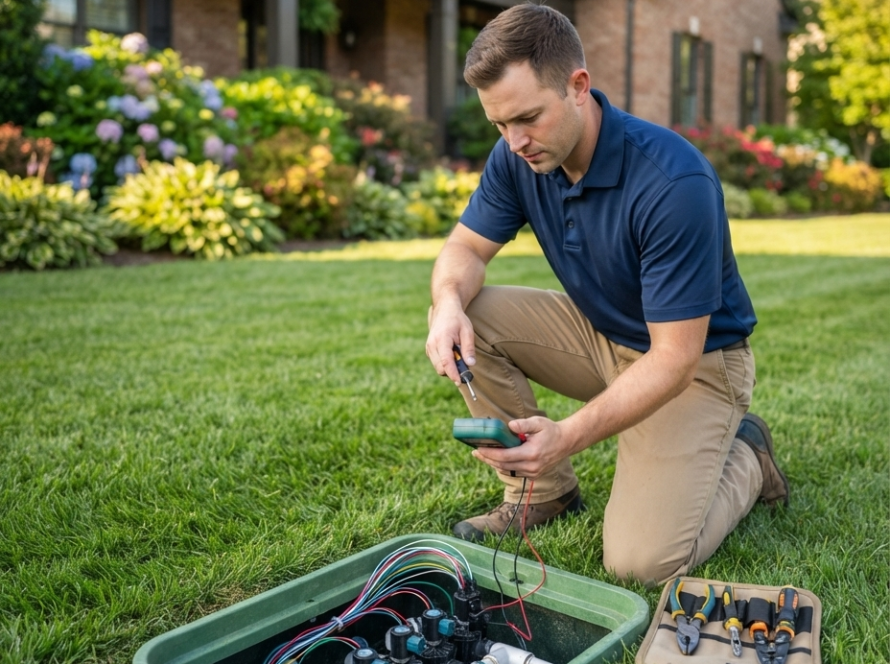
Quick answer: A professional spring sprinkler start-up should restore the system to operation carefully, run and inspect every zone, identify leaks or winter damage, verify valve operation, inspect heads and nozzles, test the controller and sensors, and adjust coverage and scheduling for current conditions.
1. Restore the irrigation water supply
The system is brought back under pressure while visible components and piping behavior are observed for leaks.
2. Run every irrigation zone
Each zone is operated individually so dead zones, stuck valves, weak pressure and hidden leaks can be identified.
3. Inspect sprinkler heads and coverage
Broken, tilted, buried, clogged or misdirected sprinklers can create dry areas and water waste. Heads and nozzles are checked against current landscape conditions.
4. Check valves and shutdown behavior
Every zone should start and stop correctly. Continued flow can indicate valve or electrical problems.
5. Verify controller and sensor operation
Date, time, schedules, manual operation, rain sensors and weather-control settings should be checked before automatic watering resumes.
6. Adjust seasonal watering
Spring irrigation should reflect current rainfall and landscape demand rather than automatically using a hot-weather schedule.
See our spring start-up service and when to start sprinklers in Waxhaw.